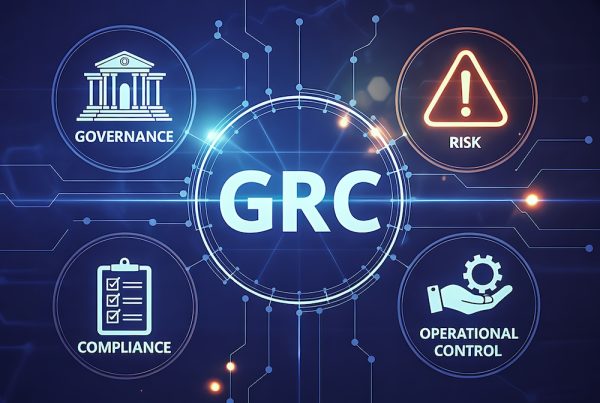

Regulators across the United States increasingly expect organizations to demonstrate cyber resilience through documentation, testing, vendor oversight, and executive accountability, not just a written cybersecurity policy.
While specific requirements vary by industry, modern regulations, cybersecurity frameworks, and compliance standards share several common expectations. Organizations are expected to understand their risks, maintain visibility into their technology environments, prepare for incidents, manage third-party relationships, and involve leadership in cybersecurity decision-making.
The financial stakes continue to rise. According to IBM’s 2025 Cost of a Data Breach Report, the global average cost of a data breach reached $4.44 million, while the average cost in the United States climbed to $10.22 million.
As breach costs, reporting obligations, and regulatory scrutiny continue to increase, organizations need to demonstrate that cybersecurity is actively managed, regularly reviewed, and aligned with business risk rather than addressed only after a problem occurs.
Security Programs Must Be Risk-Based
Generic security policies are no longer enough. Organizations are increasingly expected to identify and evaluate their unique risks, maintain visibility into systems and assets, and implement controls that address those risks.
A cybersecurity program should reflect the realities of the business, including its technology environment, users, vendors, and data. Regulators and auditors want to see evidence that risks are assessed, reviewed, and addressed on an ongoing basis.
A cybersecurity assessment can provide valuable insight into where gaps exist and how current controls compare to industry expectations.

Incident Response Plans Must Be Tested
Having an incident response plan is only the starting point. Organizations are increasingly expected to demonstrate that they can execute that plan when a real incident occurs.
Documented procedures, clearly defined roles, escalation paths, recovery processes, and regular testing all help strengthen an organization’s readiness. Tabletop exercises and recovery testing can uncover weaknesses before they become problems during an actual event.
Cybersecurity consulting can help organizations develop, refine, and test incident response plans so teams know how to respond when every minute counts.
Third-Party Risk Remains a Major Focus
As businesses rely more heavily on cloud services, software providers, contractors, and other external partners, third-party risk continues to receive greater attention.
Organizations are expected to understand how vendors access systems and data, what security controls those vendors maintain, and how risks are monitored over time. A security program is only as strong as the weakest link in the supply chain.
Cybersecurity monitoring can help provide greater visibility into systems, vendors, and potential areas of concern across the organization.
Governance and Accountability Are Expanding
Cybersecurity is no longer viewed as solely an IT responsibility. Leadership teams and business decision-makers are increasingly expected to understand cyber risks, support security initiatives, and participate in oversight.
Organizations that build risk-based security programs, regularly test their response capabilities, manage vendor risk, and maintain leadership involvement will be better positioned to navigate evolving compliance expectations in 2026, 2027, and beyond.
Not sure whether your cybersecurity program would stand up to today’s regulatory expectations? The Obviam team can help you identify gaps, prioritize improvements, and build a stronger path toward compliance.